




"Great! Good product"
Mold Release & Conditioner
$15.99
/
Shipping calculated at checkout.
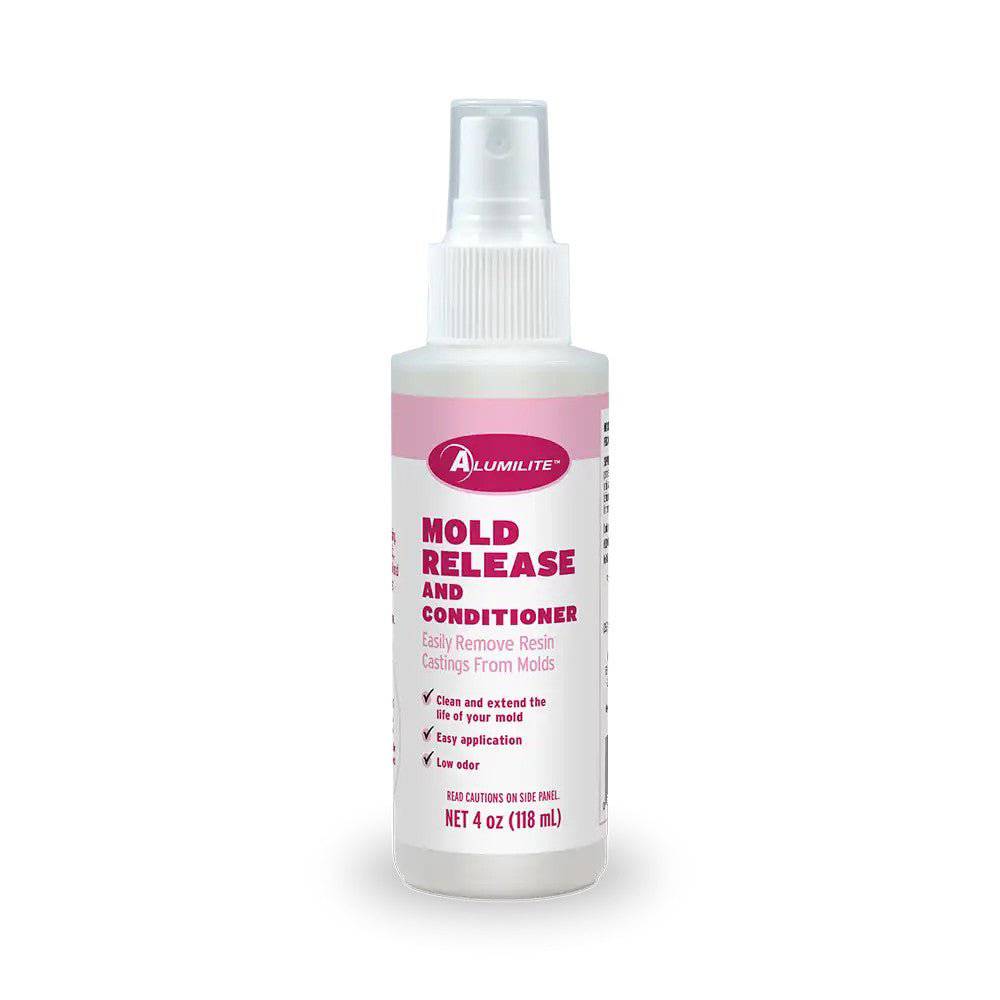
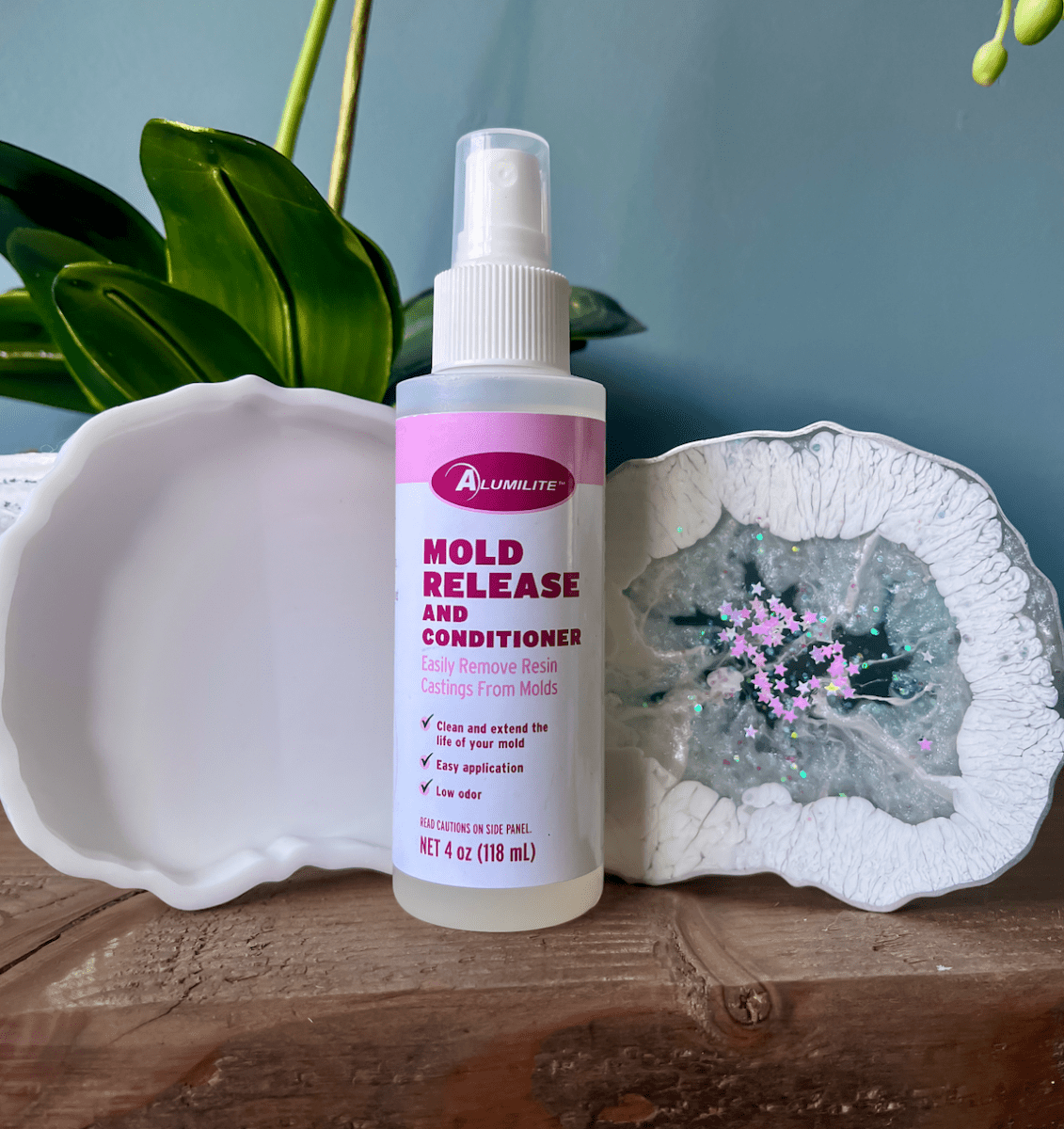
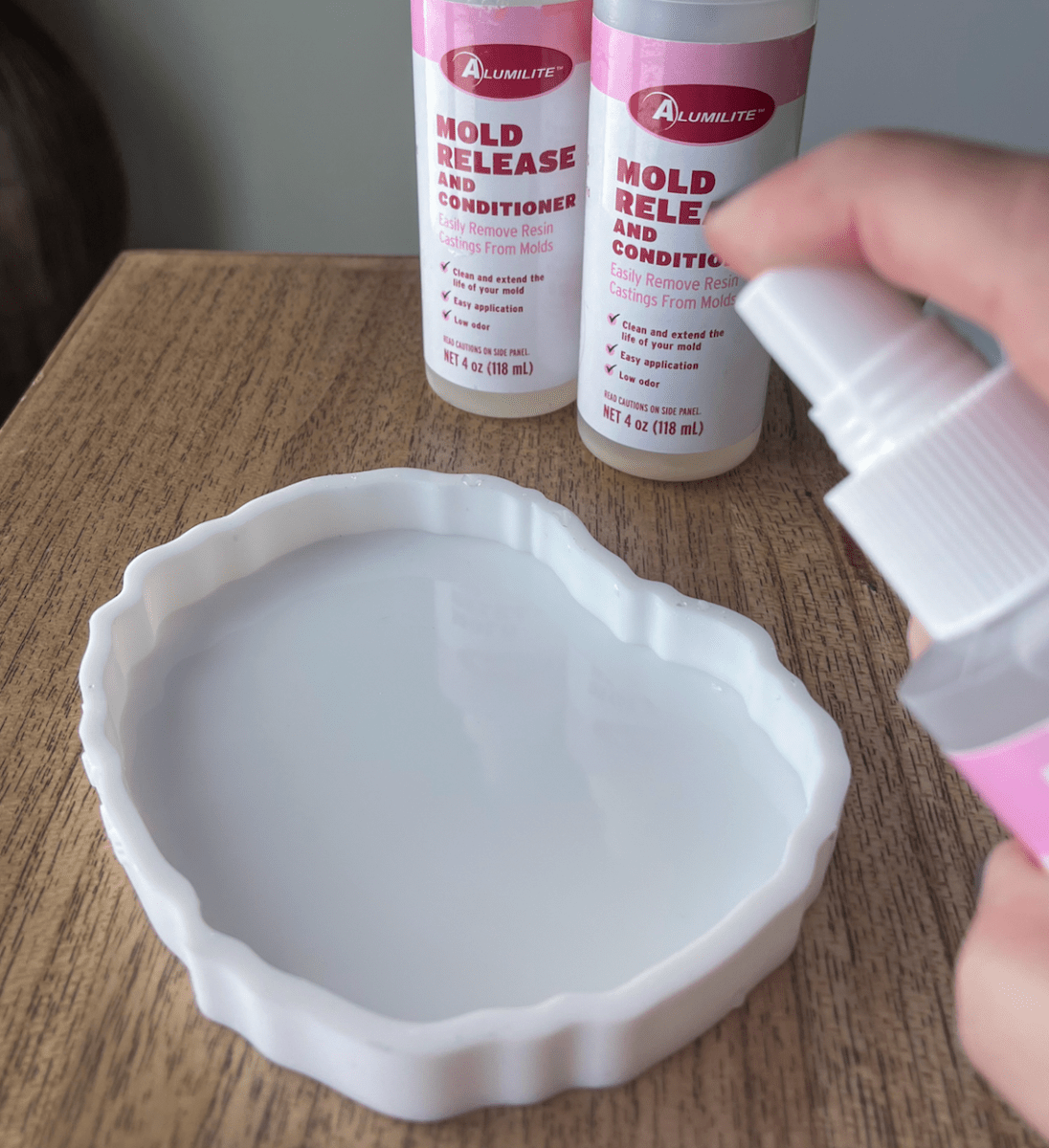
Alumilite's Mold Release & Conditioner is a dual-purpose agent designed to simplify your casting projects. It ensures smooth demolding while conditioning and extending the life of your molds. This odorless, solvent-free solution comes in a convenient 4 oz. spray pump, making application effortless.
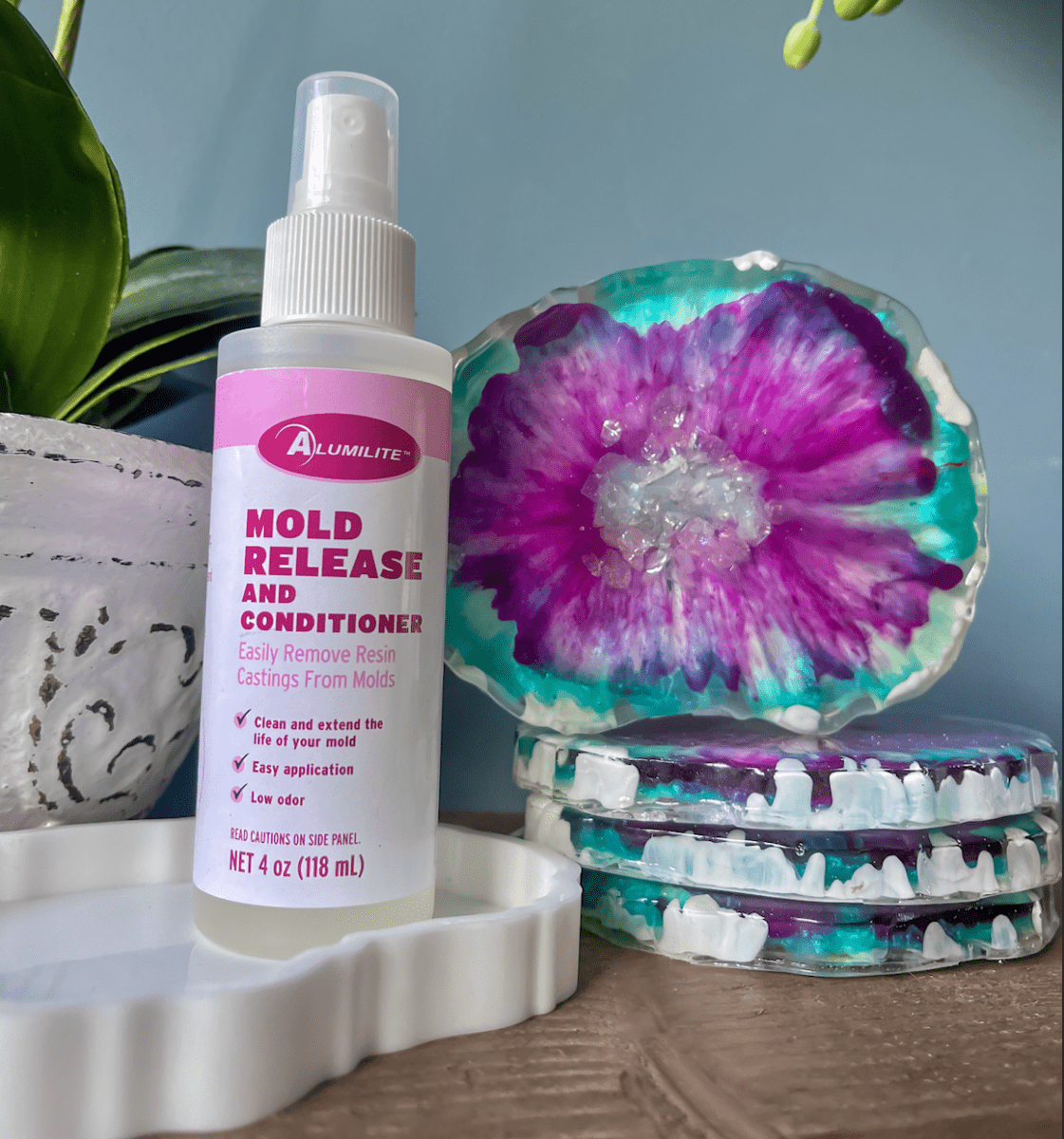
Ideal for both store-bought and custom-made molds, it provides a reliable release without compromising the integrity of your creations. Enhance your casting experience with Alumilite's Mold Release & Conditioner, and enjoy the benefits of easy demolding and prolonged mold durability.
Downloadable Resources
Overall rating: 5.0 / 5 from 5 reviews.
AI Generated Review Summary
Summary topics
Review topics: [].
Review highlights
Reviews
Haven't had resin stick yet
"I haven't not used it, so I don't know what it's like to not use it, but Ive had some pretty intricate molds and I've been able to get everything out so far."
Mold release
"Great product and fast shipping!"
Love It!
"This product has really saved my molds from being damaged, especially my chess piece molds! It makes the removal process of my crafts 10 times faster and easier!!"
A must if you use molds!
"I had a friend that picked this up for me to give a try. I do use the mold spray from Alumilite that I love but I also use the conditioner spray as it very much has helped keep my molds conditioned and I have noticed they hold shape better as well. I use this a couple times a month as an extra step. After destroying several molds thankfully it’s a thing of the past. Give this a try, you will love it."
Q&A
- i'm new to resin, could you explain exactly how to use this? should i use it to clean my molds or only before pouring as a release agent? and what is the difference between this product and the aerosol spray can mold release?
- I';d be happy to explain how to use Mold Release and Conditioner, as well as the differences between it and the aerosol spray can mold release. How to Use Mold Release and Conditioner: As a Release Agent: Before pouring your resin, apply a thin, even coat of the Mold Release and Conditioner to your mold. This will help ensure that your cured resin piece pops out easily without sticking or damaging the mold. Just rub it onto the mold's surface, making sure to cover all the intricate details. For Cleaning Molds: Mold Release and Conditioner can also be used to clean your molds. After demolding, you can use it to wipe down your mold, helping to remove any leftover resin residue and keeping your mold in good condition for future use. Differences Between Mold Release and Conditioner vs. Aerosol Spray Mold Release: Mold Release and Conditioner (Liquid Form): This product is a liquid that you apply with a cloth or brush. It';s great for both conditioning your molds and as a release agent. It also helps extend the life of your molds by keeping them flexible and preventing resin buildup. Aerosol Spray Mold Release: This comes in a spray can and is designed mainly as a quick-release agent. It';s very convenient for covering large or detailed molds quickly, but it's typically used only as a release agent and not for cleaning or conditioning. When to Use Each: Mold Release and Conditioner is ideal if you want a dual-purpose product that can both condition and clean your molds, as well as serve as a release agent before pouring resin. Aerosol Spray Mold Release is great for ease of use and when you need to quickly and evenly coat intricate molds before pouring. Both are excellent tools, and the choice depends on your workflow and preference! If you have more questions or need further guidance, don't hesitate to reach out at (269) 488-4000 or info@alumilite.com. Happy crafting! 😊
- i’m new to resin, could you explain exactly how to use this? should i use it to clean my molds or only before pouring as a release agent? and what is the difference between this product and the aerosol spray can mold release?
- I'd be happy to explain how to use Mold Release and Conditioner, as well as the differences between it and the aerosol spray can mold release. How to Use Mold Release and Conditioner: As a Release Agent: Before pouring your resin, apply a thin, even coat of the Mold Release and Conditioner to your mold. This will help ensure that your cured resin piece pops out easily without sticking or damaging the mold. Just rub it onto the mold’s surface, making sure to cover all the intricate details. For Cleaning Molds: Mold Release and Conditioner can also be used to clean your molds. After demolding, you can use it to wipe down your mold, helping to remove any leftover resin residue and keeping your mold in good condition for future use. Differences Between Mold Release and Conditioner vs. Aerosol Spray Mold Release: Mold Release and Conditioner (Liquid Form): This product is a liquid that you apply with a cloth or brush. It's great for both conditioning your molds and as a release agent. It also helps extend the life of your molds by keeping them flexible and preventing resin buildup. Aerosol Spray Mold Release: This comes in a spray can and is designed mainly as a quick-release agent. It's very convenient for covering large or detailed molds quickly, but it’s typically used only as a release agent and not for cleaning or conditioning. When to Use Each: Mold Release and Conditioner is ideal if you want a dual-purpose product that can both condition and clean your molds, as well as serve as a release agent before pouring resin. Aerosol Spray Mold Release is great for ease of use and when you need to quickly and evenly coat intricate molds before pouring. Both are excellent tools, and the choice depends on your workflow and preference! If you have more questions or need further guidance, don’t hesitate to reach out at (269) 488-4000 or info@alumilite.com. Happy crafting! 😊
- Can you use this as a barrier when pouring 2 part molds between halves so they don't adhere?
- Great question indeed! You will likely get some adhesion or cure inhibition. If cutting the mold and re-securing it with rubber bands for the casting pour doesn';t suit your project, good old-fashioned Vaseline could be a handy alternative to prevent a silicone to silicone bond. A thin layer applied to the surface can act as a barrier. However, it';s important to apply it sparingly to avoid affecting the surface detail of the silicone. 🛠?💡 Before committing to your main project, we recommend doing a small test run. This way, you can see firsthand how well the Vaseline works as a release agent for your specific mold and resin combination. A little trial can go a long way in ensuring everything goes smoothly for the full-scale pour. 🧪🔍 If you have any more questions or need further tips, don';t hesitate to reach out. We';re here to help make your crafting experience as seamless as possible! 🚀🌈
- Can you use this as a barrier when pouring 2 part molds between halves so they don't adhere?
- Great question indeed! You will likely get some adhesion or cure inhibition. If cutting the mold and re-securing it with rubber bands for the casting pour doesn't suit your project, good old-fashioned Vaseline could be a handy alternative to prevent a silicone to silicone bond. A thin layer applied to the surface can act as a barrier. However, it's important to apply it sparingly to avoid affecting the surface detail of the silicone. 🛠️💡 Before committing to your main project, we recommend doing a small test run. This way, you can see firsthand how well the Vaseline works as a release agent for your specific mold and resin combination. A little trial can go a long way in ensuring everything goes smoothly for the full-scale pour. 🧪🔍 If you have any more questions or need further tips, don't hesitate to reach out. We're here to help make your crafting experience as seamless as possible! 🚀🌈
Overall rating: 5.0 / 5 from 5 reviews.
AI Generated Review Summary
Summary topics
Review topics: [].
Review highlights
Reviews
"Great! Good product"
Haven't had resin stick yet
"I haven't not used it, so I don't know what it's like to not use it, but Ive had some pretty intricate molds and I've been able to get everything out so far."
Mold release
"Great product and fast shipping!"
Love It!
"This product has really saved my molds from being damaged, especially my chess piece molds! It makes the removal process of my crafts 10 times faster and easier!!"
A must if you use molds!
"I had a friend that picked this up for me to give a try. I do use the mold spray from Alumilite that I love but I also use the conditioner spray as it very much has helped keep my molds conditioned and I have noticed they hold shape better as well. I use this a couple times a month as an extra step. After destroying several molds thankfully it’s a thing of the past. Give this a try, you will love it."
Q&A
- i'm new to resin, could you explain exactly how to use this? should i use it to clean my molds or only before pouring as a release agent? and what is the difference between this product and the aerosol spray can mold release?
- I';d be happy to explain how to use Mold Release and Conditioner, as well as the differences between it and the aerosol spray can mold release. How to Use Mold Release and Conditioner: As a Release Agent: Before pouring your resin, apply a thin, even coat of the Mold Release and Conditioner to your mold. This will help ensure that your cured resin piece pops out easily without sticking or damaging the mold. Just rub it onto the mold's surface, making sure to cover all the intricate details. For Cleaning Molds: Mold Release and Conditioner can also be used to clean your molds. After demolding, you can use it to wipe down your mold, helping to remove any leftover resin residue and keeping your mold in good condition for future use. Differences Between Mold Release and Conditioner vs. Aerosol Spray Mold Release: Mold Release and Conditioner (Liquid Form): This product is a liquid that you apply with a cloth or brush. It';s great for both conditioning your molds and as a release agent. It also helps extend the life of your molds by keeping them flexible and preventing resin buildup. Aerosol Spray Mold Release: This comes in a spray can and is designed mainly as a quick-release agent. It';s very convenient for covering large or detailed molds quickly, but it's typically used only as a release agent and not for cleaning or conditioning. When to Use Each: Mold Release and Conditioner is ideal if you want a dual-purpose product that can both condition and clean your molds, as well as serve as a release agent before pouring resin. Aerosol Spray Mold Release is great for ease of use and when you need to quickly and evenly coat intricate molds before pouring. Both are excellent tools, and the choice depends on your workflow and preference! If you have more questions or need further guidance, don't hesitate to reach out at (269) 488-4000 or info@alumilite.com. Happy crafting! 😊
- i’m new to resin, could you explain exactly how to use this? should i use it to clean my molds or only before pouring as a release agent? and what is the difference between this product and the aerosol spray can mold release?
- I'd be happy to explain how to use Mold Release and Conditioner, as well as the differences between it and the aerosol spray can mold release. How to Use Mold Release and Conditioner: As a Release Agent: Before pouring your resin, apply a thin, even coat of the Mold Release and Conditioner to your mold. This will help ensure that your cured resin piece pops out easily without sticking or damaging the mold. Just rub it onto the mold’s surface, making sure to cover all the intricate details. For Cleaning Molds: Mold Release and Conditioner can also be used to clean your molds. After demolding, you can use it to wipe down your mold, helping to remove any leftover resin residue and keeping your mold in good condition for future use. Differences Between Mold Release and Conditioner vs. Aerosol Spray Mold Release: Mold Release and Conditioner (Liquid Form): This product is a liquid that you apply with a cloth or brush. It's great for both conditioning your molds and as a release agent. It also helps extend the life of your molds by keeping them flexible and preventing resin buildup. Aerosol Spray Mold Release: This comes in a spray can and is designed mainly as a quick-release agent. It's very convenient for covering large or detailed molds quickly, but it’s typically used only as a release agent and not for cleaning or conditioning. When to Use Each: Mold Release and Conditioner is ideal if you want a dual-purpose product that can both condition and clean your molds, as well as serve as a release agent before pouring resin. Aerosol Spray Mold Release is great for ease of use and when you need to quickly and evenly coat intricate molds before pouring. Both are excellent tools, and the choice depends on your workflow and preference! If you have more questions or need further guidance, don’t hesitate to reach out at (269) 488-4000 or info@alumilite.com. Happy crafting! 😊
- Can you use this as a barrier when pouring 2 part molds between halves so they don't adhere?
- Great question indeed! You will likely get some adhesion or cure inhibition. If cutting the mold and re-securing it with rubber bands for the casting pour doesn';t suit your project, good old-fashioned Vaseline could be a handy alternative to prevent a silicone to silicone bond. A thin layer applied to the surface can act as a barrier. However, it';s important to apply it sparingly to avoid affecting the surface detail of the silicone. 🛠?💡 Before committing to your main project, we recommend doing a small test run. This way, you can see firsthand how well the Vaseline works as a release agent for your specific mold and resin combination. A little trial can go a long way in ensuring everything goes smoothly for the full-scale pour. 🧪🔍 If you have any more questions or need further tips, don';t hesitate to reach out. We';re here to help make your crafting experience as seamless as possible! 🚀🌈
- Can you use this as a barrier when pouring 2 part molds between halves so they don't adhere?
- Great question indeed! You will likely get some adhesion or cure inhibition. If cutting the mold and re-securing it with rubber bands for the casting pour doesn't suit your project, good old-fashioned Vaseline could be a handy alternative to prevent a silicone to silicone bond. A thin layer applied to the surface can act as a barrier. However, it's important to apply it sparingly to avoid affecting the surface detail of the silicone. 🛠️💡 Before committing to your main project, we recommend doing a small test run. This way, you can see firsthand how well the Vaseline works as a release agent for your specific mold and resin combination. A little trial can go a long way in ensuring everything goes smoothly for the full-scale pour. 🧪🔍 If you have any more questions or need further tips, don't hesitate to reach out. We're here to help make your crafting experience as seamless as possible! 🚀🌈
Overall rating: 5.0 / 5 from 5 reviews.
AI Generated Review Summary
Summary topics
Review topics: [].
Review highlights
Reviews
"Great! Good product"
Haven't had resin stick yet
"I haven't not used it, so I don't know what it's like to not use it, but Ive had some pretty intricate molds and I've been able to get everything out so far."
Mold release
"Great product and fast shipping!"
Love It!
"This product has really saved my molds from being damaged, especially my chess piece molds! It makes the removal process of my crafts 10 times faster and easier!!"
A must if you use molds!
"I had a friend that picked this up for me to give a try. I do use the mold spray from Alumilite that I love but I also use the conditioner spray as it very much has helped keep my molds conditioned and I have noticed they hold shape better as well. I use this a couple times a month as an extra step. After destroying several molds thankfully it’s a thing of the past. Give this a try, you will love it."
Q&A
- i'm new to resin, could you explain exactly how to use this? should i use it to clean my molds or only before pouring as a release agent? and what is the difference between this product and the aerosol spray can mold release?
- I';d be happy to explain how to use Mold Release and Conditioner, as well as the differences between it and the aerosol spray can mold release. How to Use Mold Release and Conditioner: As a Release Agent: Before pouring your resin, apply a thin, even coat of the Mold Release and Conditioner to your mold. This will help ensure that your cured resin piece pops out easily without sticking or damaging the mold. Just rub it onto the mold's surface, making sure to cover all the intricate details. For Cleaning Molds: Mold Release and Conditioner can also be used to clean your molds. After demolding, you can use it to wipe down your mold, helping to remove any leftover resin residue and keeping your mold in good condition for future use. Differences Between Mold Release and Conditioner vs. Aerosol Spray Mold Release: Mold Release and Conditioner (Liquid Form): This product is a liquid that you apply with a cloth or brush. It';s great for both conditioning your molds and as a release agent. It also helps extend the life of your molds by keeping them flexible and preventing resin buildup. Aerosol Spray Mold Release: This comes in a spray can and is designed mainly as a quick-release agent. It';s very convenient for covering large or detailed molds quickly, but it's typically used only as a release agent and not for cleaning or conditioning. When to Use Each: Mold Release and Conditioner is ideal if you want a dual-purpose product that can both condition and clean your molds, as well as serve as a release agent before pouring resin. Aerosol Spray Mold Release is great for ease of use and when you need to quickly and evenly coat intricate molds before pouring. Both are excellent tools, and the choice depends on your workflow and preference! If you have more questions or need further guidance, don't hesitate to reach out at (269) 488-4000 or info@alumilite.com. Happy crafting! 😊
- i’m new to resin, could you explain exactly how to use this? should i use it to clean my molds or only before pouring as a release agent? and what is the difference between this product and the aerosol spray can mold release?
- I'd be happy to explain how to use Mold Release and Conditioner, as well as the differences between it and the aerosol spray can mold release. How to Use Mold Release and Conditioner: As a Release Agent: Before pouring your resin, apply a thin, even coat of the Mold Release and Conditioner to your mold. This will help ensure that your cured resin piece pops out easily without sticking or damaging the mold. Just rub it onto the mold’s surface, making sure to cover all the intricate details. For Cleaning Molds: Mold Release and Conditioner can also be used to clean your molds. After demolding, you can use it to wipe down your mold, helping to remove any leftover resin residue and keeping your mold in good condition for future use. Differences Between Mold Release and Conditioner vs. Aerosol Spray Mold Release: Mold Release and Conditioner (Liquid Form): This product is a liquid that you apply with a cloth or brush. It's great for both conditioning your molds and as a release agent. It also helps extend the life of your molds by keeping them flexible and preventing resin buildup. Aerosol Spray Mold Release: This comes in a spray can and is designed mainly as a quick-release agent. It's very convenient for covering large or detailed molds quickly, but it’s typically used only as a release agent and not for cleaning or conditioning. When to Use Each: Mold Release and Conditioner is ideal if you want a dual-purpose product that can both condition and clean your molds, as well as serve as a release agent before pouring resin. Aerosol Spray Mold Release is great for ease of use and when you need to quickly and evenly coat intricate molds before pouring. Both are excellent tools, and the choice depends on your workflow and preference! If you have more questions or need further guidance, don’t hesitate to reach out at (269) 488-4000 or info@alumilite.com. Happy crafting! 😊
- Can you use this as a barrier when pouring 2 part molds between halves so they don't adhere?
- Great question indeed! You will likely get some adhesion or cure inhibition. If cutting the mold and re-securing it with rubber bands for the casting pour doesn';t suit your project, good old-fashioned Vaseline could be a handy alternative to prevent a silicone to silicone bond. A thin layer applied to the surface can act as a barrier. However, it';s important to apply it sparingly to avoid affecting the surface detail of the silicone. 🛠?💡 Before committing to your main project, we recommend doing a small test run. This way, you can see firsthand how well the Vaseline works as a release agent for your specific mold and resin combination. A little trial can go a long way in ensuring everything goes smoothly for the full-scale pour. 🧪🔍 If you have any more questions or need further tips, don';t hesitate to reach out. We';re here to help make your crafting experience as seamless as possible! 🚀🌈
- Can you use this as a barrier when pouring 2 part molds between halves so they don't adhere?
- Great question indeed! You will likely get some adhesion or cure inhibition. If cutting the mold and re-securing it with rubber bands for the casting pour doesn't suit your project, good old-fashioned Vaseline could be a handy alternative to prevent a silicone to silicone bond. A thin layer applied to the surface can act as a barrier. However, it's important to apply it sparingly to avoid affecting the surface detail of the silicone. 🛠️💡 Before committing to your main project, we recommend doing a small test run. This way, you can see firsthand how well the Vaseline works as a release agent for your specific mold and resin combination. A little trial can go a long way in ensuring everything goes smoothly for the full-scale pour. 🧪🔍 If you have any more questions or need further tips, don't hesitate to reach out. We're here to help make your crafting experience as seamless as possible! 🚀🌈
Overall rating: 5.0 / 5 from 5 reviews.
AI Generated Review Summary
Summary topics
Review topics: [].
Review highlights
Reviews
"Great! Good product"
Haven't had resin stick yet
"I haven't not used it, so I don't know what it's like to not use it, but Ive had some pretty intricate molds and I've been able to get everything out so far."
Mold release
"Great product and fast shipping!"
Love It!
"This product has really saved my molds from being damaged, especially my chess piece molds! It makes the removal process of my crafts 10 times faster and easier!!"
A must if you use molds!
"I had a friend that picked this up for me to give a try. I do use the mold spray from Alumilite that I love but I also use the conditioner spray as it very much has helped keep my molds conditioned and I have noticed they hold shape better as well. I use this a couple times a month as an extra step. After destroying several molds thankfully it’s a thing of the past. Give this a try, you will love it."
Q&A
- i'm new to resin, could you explain exactly how to use this? should i use it to clean my molds or only before pouring as a release agent? and what is the difference between this product and the aerosol spray can mold release?
- I';d be happy to explain how to use Mold Release and Conditioner, as well as the differences between it and the aerosol spray can mold release. How to Use Mold Release and Conditioner: As a Release Agent: Before pouring your resin, apply a thin, even coat of the Mold Release and Conditioner to your mold. This will help ensure that your cured resin piece pops out easily without sticking or damaging the mold. Just rub it onto the mold's surface, making sure to cover all the intricate details. For Cleaning Molds: Mold Release and Conditioner can also be used to clean your molds. After demolding, you can use it to wipe down your mold, helping to remove any leftover resin residue and keeping your mold in good condition for future use. Differences Between Mold Release and Conditioner vs. Aerosol Spray Mold Release: Mold Release and Conditioner (Liquid Form): This product is a liquid that you apply with a cloth or brush. It';s great for both conditioning your molds and as a release agent. It also helps extend the life of your molds by keeping them flexible and preventing resin buildup. Aerosol Spray Mold Release: This comes in a spray can and is designed mainly as a quick-release agent. It';s very convenient for covering large or detailed molds quickly, but it's typically used only as a release agent and not for cleaning or conditioning. When to Use Each: Mold Release and Conditioner is ideal if you want a dual-purpose product that can both condition and clean your molds, as well as serve as a release agent before pouring resin. Aerosol Spray Mold Release is great for ease of use and when you need to quickly and evenly coat intricate molds before pouring. Both are excellent tools, and the choice depends on your workflow and preference! If you have more questions or need further guidance, don't hesitate to reach out at (269) 488-4000 or info@alumilite.com. Happy crafting! 😊
- i’m new to resin, could you explain exactly how to use this? should i use it to clean my molds or only before pouring as a release agent? and what is the difference between this product and the aerosol spray can mold release?
- I'd be happy to explain how to use Mold Release and Conditioner, as well as the differences between it and the aerosol spray can mold release. How to Use Mold Release and Conditioner: As a Release Agent: Before pouring your resin, apply a thin, even coat of the Mold Release and Conditioner to your mold. This will help ensure that your cured resin piece pops out easily without sticking or damaging the mold. Just rub it onto the mold’s surface, making sure to cover all the intricate details. For Cleaning Molds: Mold Release and Conditioner can also be used to clean your molds. After demolding, you can use it to wipe down your mold, helping to remove any leftover resin residue and keeping your mold in good condition for future use. Differences Between Mold Release and Conditioner vs. Aerosol Spray Mold Release: Mold Release and Conditioner (Liquid Form): This product is a liquid that you apply with a cloth or brush. It's great for both conditioning your molds and as a release agent. It also helps extend the life of your molds by keeping them flexible and preventing resin buildup. Aerosol Spray Mold Release: This comes in a spray can and is designed mainly as a quick-release agent. It's very convenient for covering large or detailed molds quickly, but it’s typically used only as a release agent and not for cleaning or conditioning. When to Use Each: Mold Release and Conditioner is ideal if you want a dual-purpose product that can both condition and clean your molds, as well as serve as a release agent before pouring resin. Aerosol Spray Mold Release is great for ease of use and when you need to quickly and evenly coat intricate molds before pouring. Both are excellent tools, and the choice depends on your workflow and preference! If you have more questions or need further guidance, don’t hesitate to reach out at (269) 488-4000 or info@alumilite.com. Happy crafting! 😊
- Can you use this as a barrier when pouring 2 part molds between halves so they don't adhere?
- Great question indeed! You will likely get some adhesion or cure inhibition. If cutting the mold and re-securing it with rubber bands for the casting pour doesn';t suit your project, good old-fashioned Vaseline could be a handy alternative to prevent a silicone to silicone bond. A thin layer applied to the surface can act as a barrier. However, it';s important to apply it sparingly to avoid affecting the surface detail of the silicone. 🛠?💡 Before committing to your main project, we recommend doing a small test run. This way, you can see firsthand how well the Vaseline works as a release agent for your specific mold and resin combination. A little trial can go a long way in ensuring everything goes smoothly for the full-scale pour. 🧪🔍 If you have any more questions or need further tips, don';t hesitate to reach out. We';re here to help make your crafting experience as seamless as possible! 🚀🌈
- Can you use this as a barrier when pouring 2 part molds between halves so they don't adhere?
- Great question indeed! You will likely get some adhesion or cure inhibition. If cutting the mold and re-securing it with rubber bands for the casting pour doesn't suit your project, good old-fashioned Vaseline could be a handy alternative to prevent a silicone to silicone bond. A thin layer applied to the surface can act as a barrier. However, it's important to apply it sparingly to avoid affecting the surface detail of the silicone. 🛠️💡 Before committing to your main project, we recommend doing a small test run. This way, you can see firsthand how well the Vaseline works as a release agent for your specific mold and resin combination. A little trial can go a long way in ensuring everything goes smoothly for the full-scale pour. 🧪🔍 If you have any more questions or need further tips, don't hesitate to reach out. We're here to help make your crafting experience as seamless as possible! 🚀🌈
Overall rating: 5.0 / 5 from 5 reviews.
AI Generated Review Summary
Summary topics
Review topics: [].
Review highlights
Reviews
"Great! Good product"
Haven't had resin stick yet
"I haven't not used it, so I don't know what it's like to not use it, but Ive had some pretty intricate molds and I've been able to get everything out so far."
Mold release
"Great product and fast shipping!"
Love It!
"This product has really saved my molds from being damaged, especially my chess piece molds! It makes the removal process of my crafts 10 times faster and easier!!"
A must if you use molds!
"I had a friend that picked this up for me to give a try. I do use the mold spray from Alumilite that I love but I also use the conditioner spray as it very much has helped keep my molds conditioned and I have noticed they hold shape better as well. I use this a couple times a month as an extra step. After destroying several molds thankfully it’s a thing of the past. Give this a try, you will love it."
Q&A
- i'm new to resin, could you explain exactly how to use this? should i use it to clean my molds or only before pouring as a release agent? and what is the difference between this product and the aerosol spray can mold release?
- I';d be happy to explain how to use Mold Release and Conditioner, as well as the differences between it and the aerosol spray can mold release. How to Use Mold Release and Conditioner: As a Release Agent: Before pouring your resin, apply a thin, even coat of the Mold Release and Conditioner to your mold. This will help ensure that your cured resin piece pops out easily without sticking or damaging the mold. Just rub it onto the mold's surface, making sure to cover all the intricate details. For Cleaning Molds: Mold Release and Conditioner can also be used to clean your molds. After demolding, you can use it to wipe down your mold, helping to remove any leftover resin residue and keeping your mold in good condition for future use. Differences Between Mold Release and Conditioner vs. Aerosol Spray Mold Release: Mold Release and Conditioner (Liquid Form): This product is a liquid that you apply with a cloth or brush. It';s great for both conditioning your molds and as a release agent. It also helps extend the life of your molds by keeping them flexible and preventing resin buildup. Aerosol Spray Mold Release: This comes in a spray can and is designed mainly as a quick-release agent. It';s very convenient for covering large or detailed molds quickly, but it's typically used only as a release agent and not for cleaning or conditioning. When to Use Each: Mold Release and Conditioner is ideal if you want a dual-purpose product that can both condition and clean your molds, as well as serve as a release agent before pouring resin. Aerosol Spray Mold Release is great for ease of use and when you need to quickly and evenly coat intricate molds before pouring. Both are excellent tools, and the choice depends on your workflow and preference! If you have more questions or need further guidance, don't hesitate to reach out at (269) 488-4000 or info@alumilite.com. Happy crafting! 😊
- i’m new to resin, could you explain exactly how to use this? should i use it to clean my molds or only before pouring as a release agent? and what is the difference between this product and the aerosol spray can mold release?
- I'd be happy to explain how to use Mold Release and Conditioner, as well as the differences between it and the aerosol spray can mold release. How to Use Mold Release and Conditioner: As a Release Agent: Before pouring your resin, apply a thin, even coat of the Mold Release and Conditioner to your mold. This will help ensure that your cured resin piece pops out easily without sticking or damaging the mold. Just rub it onto the mold’s surface, making sure to cover all the intricate details. For Cleaning Molds: Mold Release and Conditioner can also be used to clean your molds. After demolding, you can use it to wipe down your mold, helping to remove any leftover resin residue and keeping your mold in good condition for future use. Differences Between Mold Release and Conditioner vs. Aerosol Spray Mold Release: Mold Release and Conditioner (Liquid Form): This product is a liquid that you apply with a cloth or brush. It's great for both conditioning your molds and as a release agent. It also helps extend the life of your molds by keeping them flexible and preventing resin buildup. Aerosol Spray Mold Release: This comes in a spray can and is designed mainly as a quick-release agent. It's very convenient for covering large or detailed molds quickly, but it’s typically used only as a release agent and not for cleaning or conditioning. When to Use Each: Mold Release and Conditioner is ideal if you want a dual-purpose product that can both condition and clean your molds, as well as serve as a release agent before pouring resin. Aerosol Spray Mold Release is great for ease of use and when you need to quickly and evenly coat intricate molds before pouring. Both are excellent tools, and the choice depends on your workflow and preference! If you have more questions or need further guidance, don’t hesitate to reach out at (269) 488-4000 or info@alumilite.com. Happy crafting! 😊
- Can you use this as a barrier when pouring 2 part molds between halves so they don't adhere?
- Great question indeed! You will likely get some adhesion or cure inhibition. If cutting the mold and re-securing it with rubber bands for the casting pour doesn';t suit your project, good old-fashioned Vaseline could be a handy alternative to prevent a silicone to silicone bond. A thin layer applied to the surface can act as a barrier. However, it';s important to apply it sparingly to avoid affecting the surface detail of the silicone. 🛠?💡 Before committing to your main project, we recommend doing a small test run. This way, you can see firsthand how well the Vaseline works as a release agent for your specific mold and resin combination. A little trial can go a long way in ensuring everything goes smoothly for the full-scale pour. 🧪🔍 If you have any more questions or need further tips, don';t hesitate to reach out. We';re here to help make your crafting experience as seamless as possible! 🚀🌈
- Can you use this as a barrier when pouring 2 part molds between halves so they don't adhere?
- Great question indeed! You will likely get some adhesion or cure inhibition. If cutting the mold and re-securing it with rubber bands for the casting pour doesn't suit your project, good old-fashioned Vaseline could be a handy alternative to prevent a silicone to silicone bond. A thin layer applied to the surface can act as a barrier. However, it's important to apply it sparingly to avoid affecting the surface detail of the silicone. 🛠️💡 Before committing to your main project, we recommend doing a small test run. This way, you can see firsthand how well the Vaseline works as a release agent for your specific mold and resin combination. A little trial can go a long way in ensuring everything goes smoothly for the full-scale pour. 🧪🔍 If you have any more questions or need further tips, don't hesitate to reach out. We're here to help make your crafting experience as seamless as possible! 🚀🌈
Overall rating: 5.0 / 5 from 5 reviews.
AI Generated Review Summary
Summary topics
Review topics: [].
Review highlights
Reviews
"Great! Good product"
Haven't had resin stick yet
"I haven't not used it, so I don't know what it's like to not use it, but Ive had some pretty intricate molds and I've been able to get everything out so far."
Mold release
"Great product and fast shipping!"
Love It!
"This product has really saved my molds from being damaged, especially my chess piece molds! It makes the removal process of my crafts 10 times faster and easier!!"
A must if you use molds!
"I had a friend that picked this up for me to give a try. I do use the mold spray from Alumilite that I love but I also use the conditioner spray as it very much has helped keep my molds conditioned and I have noticed they hold shape better as well. I use this a couple times a month as an extra step. After destroying several molds thankfully it’s a thing of the past. Give this a try, you will love it."
Q&A
- i'm new to resin, could you explain exactly how to use this? should i use it to clean my molds or only before pouring as a release agent? and what is the difference between this product and the aerosol spray can mold release?
- I';d be happy to explain how to use Mold Release and Conditioner, as well as the differences between it and the aerosol spray can mold release. How to Use Mold Release and Conditioner: As a Release Agent: Before pouring your resin, apply a thin, even coat of the Mold Release and Conditioner to your mold. This will help ensure that your cured resin piece pops out easily without sticking or damaging the mold. Just rub it onto the mold's surface, making sure to cover all the intricate details. For Cleaning Molds: Mold Release and Conditioner can also be used to clean your molds. After demolding, you can use it to wipe down your mold, helping to remove any leftover resin residue and keeping your mold in good condition for future use. Differences Between Mold Release and Conditioner vs. Aerosol Spray Mold Release: Mold Release and Conditioner (Liquid Form): This product is a liquid that you apply with a cloth or brush. It';s great for both conditioning your molds and as a release agent. It also helps extend the life of your molds by keeping them flexible and preventing resin buildup. Aerosol Spray Mold Release: This comes in a spray can and is designed mainly as a quick-release agent. It';s very convenient for covering large or detailed molds quickly, but it's typically used only as a release agent and not for cleaning or conditioning. When to Use Each: Mold Release and Conditioner is ideal if you want a dual-purpose product that can both condition and clean your molds, as well as serve as a release agent before pouring resin. Aerosol Spray Mold Release is great for ease of use and when you need to quickly and evenly coat intricate molds before pouring. Both are excellent tools, and the choice depends on your workflow and preference! If you have more questions or need further guidance, don't hesitate to reach out at (269) 488-4000 or info@alumilite.com. Happy crafting! 😊
- i’m new to resin, could you explain exactly how to use this? should i use it to clean my molds or only before pouring as a release agent? and what is the difference between this product and the aerosol spray can mold release?
- I'd be happy to explain how to use Mold Release and Conditioner, as well as the differences between it and the aerosol spray can mold release. How to Use Mold Release and Conditioner: As a Release Agent: Before pouring your resin, apply a thin, even coat of the Mold Release and Conditioner to your mold. This will help ensure that your cured resin piece pops out easily without sticking or damaging the mold. Just rub it onto the mold’s surface, making sure to cover all the intricate details. For Cleaning Molds: Mold Release and Conditioner can also be used to clean your molds. After demolding, you can use it to wipe down your mold, helping to remove any leftover resin residue and keeping your mold in good condition for future use. Differences Between Mold Release and Conditioner vs. Aerosol Spray Mold Release: Mold Release and Conditioner (Liquid Form): This product is a liquid that you apply with a cloth or brush. It's great for both conditioning your molds and as a release agent. It also helps extend the life of your molds by keeping them flexible and preventing resin buildup. Aerosol Spray Mold Release: This comes in a spray can and is designed mainly as a quick-release agent. It's very convenient for covering large or detailed molds quickly, but it’s typically used only as a release agent and not for cleaning or conditioning. When to Use Each: Mold Release and Conditioner is ideal if you want a dual-purpose product that can both condition and clean your molds, as well as serve as a release agent before pouring resin. Aerosol Spray Mold Release is great for ease of use and when you need to quickly and evenly coat intricate molds before pouring. Both are excellent tools, and the choice depends on your workflow and preference! If you have more questions or need further guidance, don’t hesitate to reach out at (269) 488-4000 or info@alumilite.com. Happy crafting! 😊
- Can you use this as a barrier when pouring 2 part molds between halves so they don't adhere?
- Great question indeed! You will likely get some adhesion or cure inhibition. If cutting the mold and re-securing it with rubber bands for the casting pour doesn';t suit your project, good old-fashioned Vaseline could be a handy alternative to prevent a silicone to silicone bond. A thin layer applied to the surface can act as a barrier. However, it';s important to apply it sparingly to avoid affecting the surface detail of the silicone. 🛠?💡 Before committing to your main project, we recommend doing a small test run. This way, you can see firsthand how well the Vaseline works as a release agent for your specific mold and resin combination. A little trial can go a long way in ensuring everything goes smoothly for the full-scale pour. 🧪🔍 If you have any more questions or need further tips, don';t hesitate to reach out. We';re here to help make your crafting experience as seamless as possible! 🚀🌈
- Can you use this as a barrier when pouring 2 part molds between halves so they don't adhere?
- Great question indeed! You will likely get some adhesion or cure inhibition. If cutting the mold and re-securing it with rubber bands for the casting pour doesn't suit your project, good old-fashioned Vaseline could be a handy alternative to prevent a silicone to silicone bond. A thin layer applied to the surface can act as a barrier. However, it's important to apply it sparingly to avoid affecting the surface detail of the silicone. 🛠️💡 Before committing to your main project, we recommend doing a small test run. This way, you can see firsthand how well the Vaseline works as a release agent for your specific mold and resin combination. A little trial can go a long way in ensuring everything goes smoothly for the full-scale pour. 🧪🔍 If you have any more questions or need further tips, don't hesitate to reach out. We're here to help make your crafting experience as seamless as possible! 🚀🌈


